
Do you use Avizo, the 3D visualization and analysis software for scientific and industrial data? Research staff from the Henry Moseley X-ray Imaging Facility in the School of Materials are now running two drop in sessions per week.
Do you use Avizo, the 3D visualization and analysis software for scientific and industrial data? Research staff from the Henry Moseley X-ray Imaging Facility in the School of Materials are now running two drop in sessions per week.

Research IT has arranged for the latest version of Git (v.2.10.2) to be available on all staff managed desktops. Git is a version control system that allows software developers to have complete control and management of their code development ensuring that you can easily revert back to previous versions, share your code and collaborate with others. Continue reading

The deadline for participation in the evaluation of visualization tools has been extended until the 18th of September 2016. Participants currently have an excellent chance of winning an Amazon voucher worth £250, £150 or £100!
Full details of the simple process to evaluate the software on offer and how to submit your feedback can be found on our visualization blog post.

The UK Data Service and Digital Innovation are running an intense all-day hackathon on Saturday 24 September at The Shed at Manchester Metropolitan University (MMU).
The UK Data Service Open Data Dive aims to bring together coders, data enthusiasts, graphic designers, project managers and pizza lovers into the same room to hunt down, crunch and beautify open social and economic data.
The Open Data Dive is free to attend and open to everyone. Free lunch and drinks will be provided.
Newcomers are welcome and there will be data specialists and programmers from the UK Data Service on hand to provide support and help. During the day, short parallel workshops will run on finding and understanding data, using APIs and big data.
For more information and registration follow the links below.
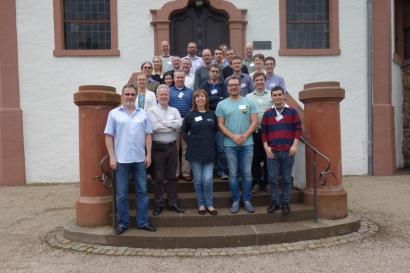 By Carole Goble, Manchester Principal Investigator at the Software Sustainability Institute, and Mike Croucher, Robert Haines, and Caroline Jay, Fellows at the Software Sustainability Institute.
How should we build the research software of the future? This was the question under consideration at the Dagstuhl Perspective’s Workshop ‘Engineering Academic Software’, co-organised by the Software Sustainability Institute’s Manchester PI Carole Goble. Experts in the area from across the world spent an intensive week presenting, discussing, debating and writing, to define current problems in the field and determine how we could address them.

The Software Sustainability Institute (SSI) will be running the Research Data Visualisation Workshop on July 28th, 2016 at the University of Manchester. If you create data visualisations and plan to visualise new data sets or would like to know about data visualisation toolings and uses then this is the workshop for you.

The Call for Submissions for WSSSPE4 is now open. The event will be held at the School of Computer Science, University of Manchester 12th – 14th September 2016.
Progress in scientific research is dependent on the quality and accessibility of research software at all levels. It is now critical to address many new challenges related to the development, deployment, maintenance, and sustainability of open-use research software: the software upon which specific research results rely. Open-use software means that the software is widely accessible (whether open source, shareware, or commercial). Research software means that the choice of software is essential to specific research results; using different software could produce different results.

Do you develop research software?
The inaugural conference of Research Software Engineers (RSEs) will be held at the Museum of Science and Industry, Manchester, UK on 15-16 September 2016. The event will target research software developers and research software engineers at any stage in their career.

We are looking for volunteers to help evaluate a number of general data analytics and visualisation tools to bridge the gap to more specialised software such as MatLab and Python.


The eTekkatho project, a collaboration between the Tekkatho Foundation, JISC, the Co-op, and the University of Manchester, is an ongoing service to deliver educational resources to the people of Myanmar.
 Research IT News